



Quick Summary: High bounce rates and slow response times can tank your rankings, but mastering Core Web Vitals can lead to traffic surges of up to 20,800%. Learn to optimize specific markers like Time to First Byte (TTFB) and First Contentful Paint to transform your site into a high-speed conversion engine.
Establishing a robust digital presence involves more than simply going live. You must evaluate how your online platform operates to ensure a seamless visitor experience. Tracking critical data helps you improve your strategy and climb search engine rankings successfully.
A fast-loading hub keeps people happy and directly influences your bottom line. We will explore vital measurements such as speed, user engagement, and traffic flow. This overview also covers conversion success and Core Web Vitals to help you succeed.
Monitoring these areas is vital to driving business growth in the American market. When you prioritize how pages load and react, you gain a massive edge. These insights provide a roadmap toward long-term digital excellence.
Watching these indicators allows you to fix problems before they hurt your reputation. Delivering high-quality interactions remains a primary goal for any growing business. Mastery of website performance metrics helps your brand stay ahead of the crowd.
What Are Website Performance Metrics?
To gauge the success of a website, it’s essential to understand the various website performance metrics that impact user experience and conversion rates. Website performance metrics are quantifiable measures used to evaluate a website’s performance and user experience. These metrics provide insights into how users interact with a website, its loading speed, and its overall effectiveness in achieving its intended purpose.
Understanding these metrics is crucial because they help website owners and developers identify areas that need improvement. By analyzing these metrics, one can make informed decisions to optimize the website, thereby enhancing user satisfaction and ultimately driving more conversions.
Website performance metrics encompass a broad range of data points, including how fast a website loads, how users navigate through it, and how engaging the content is. These metrics are vital for assessing the overall health of a website and pinpointing specific areas that require enhancement.
- User engagement and behavior
- Website speed and loading times
- Conversion rates and goal completions
- Traffic sources and demographics
By examining these aspects, website owners can gain a deeper understanding of their website’s strengths and weaknesses. This knowledge enables them to implement targeted improvements, thereby enhancing the overall user experience and improving the website’s effectiveness in achieving its goals.
Why Monitoring Website Metrics Matters for Your Online Success
Understanding your website’s metrics is vital for driving online success. In today’s digital landscape, having a website is not enough; you need to ensure it’s performing optimally to attract and retain visitors.
Monitoring website metrics allows you to identify areas that need improvement. Key metrics such as page load time, bounce rate, and conversion rate provide insights into your website’s overall performance. For instance, a slow page load time can lead to a high bounce rate, negatively impacting your online success.
Here are some critical reasons why monitoring these metrics is essential:
- Identify and fix technical issues that might be hindering your website’s performance.
- Optimize your website for better user experience, leading to higher engagement and conversion rates.
- Make data-driven decisions to improve your online presence and stay ahead of the competition.
By keeping a close eye on your website’s metrics, you can develop effective optimization strategies. For example, improving page load times can enhance user experience and reduce bounce rates. Similarly, analyzing conversion rates can help you refine your content and calls-to-action to drive more conversions.
In conclusion, monitoring website metrics is crucial for achieving online success. By understanding and acting on key metrics for website performance, you can significantly enhance your website’s overall performance and drive more conversions.
Speed Metrics: Measuring How Fast Your Website Loads
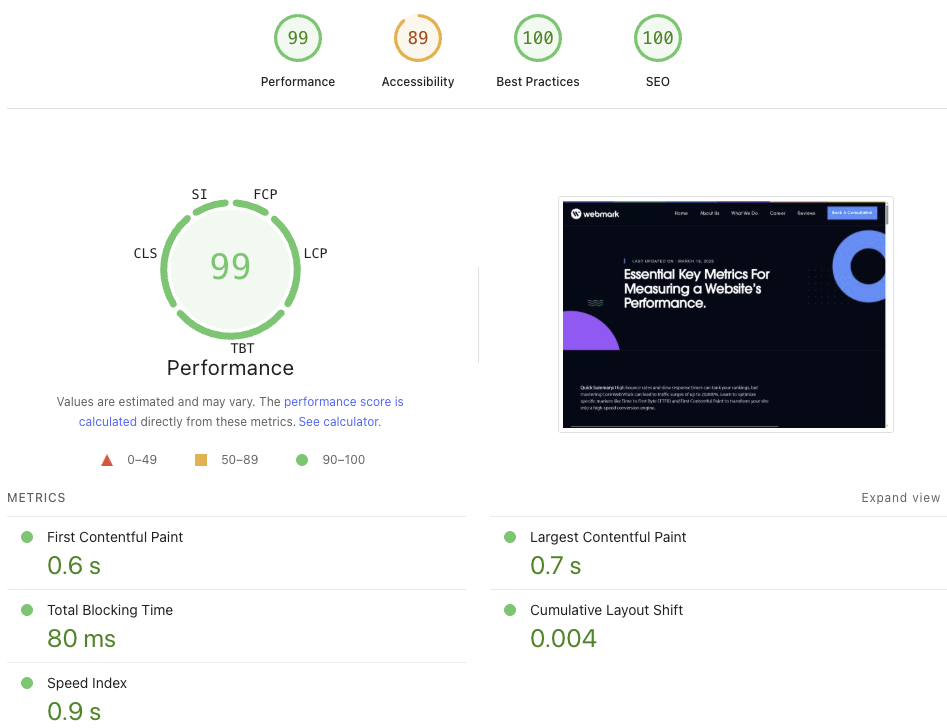
Fast loading times are critical for a website’s success, and speed metrics help achieve this. A fast-loading website is crucial for providing a good user experience and improving search engine rankings. Speed metrics help you understand how quickly your website loads and becomes interactive, allowing you to identify areas for improvement.
Page Load Time
Page load time refers to the total time it takes for a web page to fully load. It’s a critical metric because slow-loading pages can lead to high bounce rates and negatively impact user experience.
Improving page load time not only enhances user satisfaction but also contributes to better search engine rankings, as page speed is a ranking factor. Optimizing images, minifying CSS and JavaScript files, and leveraging browser caching are some strategies to improve page load time.
First Contentful Paint (FCP)
First Contentful Paint (FCP) measures the time it takes for the browser to render the first contentful element on the page, such as text or an image. A faster FCP indicates a better user experience, as it allows users to see content sooner.
FCP is an important metric because it directly impacts user perception of your website’s loading speed. Optimizing server response times and ensuring that critical CSS is loaded promptly can help improve FCP.
Time to Interactive (TTI)
Time to Interactive (TTI) is the time it takes for a web page to become fully interactive, meaning that users can interact with the page elements. A fast TTI is essential for ensuring that users can engage with your website without delay.
Achieving a good TTI score is vital for enhancing user engagement and reducing frustration caused by unresponsive pages. Optimizing JavaScript execution and reducing the impact of third-party scripts can help improve TTI.
Time to First Byte (TTFB)
Time to First Byte (TTFB) measures the time it takes for the server to respond to a user’s request and send the first byte of data. A low TTFB is crucial for fast page loads, as it indicates that the server is responding quickly.
Reducing TTFB is essential for improving overall page load times and ensuring a better user experience. Optimizing server configuration, using content delivery networks (CDNs), and improving network latency can help reduce TTFB.
User Behavior and Engagement Metrics That Reveal Visitor Actions
Understanding how visitors interact with your website is crucial for optimizing user experience and driving engagement. User behavior and engagement metrics provide valuable insights into how visitors navigate, interact with, and respond to your website’s content.
Bounce Rate
Bounce rate is a critical metric that measures the percentage of visitors who leave your website without taking any further action beyond their initial page view. A high bounce rate can indicate that your website’s content is not relevant or engaging enough for your target audience.
To improve bounce rates, ensure that your website’s content is aligned with user expectations and provides value from the outset. Optimizing page load times and ensuring a seamless user experience across devices can also help reduce bounce rates.
Exit Pages
Exit pages refer to the last page a visitor views before leaving your website. Analyzing exit pages can help identify potential issues or areas for improvement. For instance, if a particular page has a high exit rate, it may indicate that the content is not engaging or that the page is not effectively guiding visitors toward further actions.
To address high exit rates, consider enhancing content relevance, improving page design, or adding clear calls-to-action (CTAs) to encourage further engagement.
Scroll Depth
Scroll depth measures how far down a page visitors scroll. This metric can provide insights into content engagement and help identify whether your content is being consumed as intended.
A low scroll depth might suggest that your content is not compelling enough to encourage visitors to read further. To improve scroll depth, consider reformatting content for better readability or placing key information in more visible areas.
Average Time on Page
Average time on page is a metric that indicates how long visitors spend on a particular page. This can be an indicator of content engagement and relevance.
If visitors are spending a significant amount of time on a page, it likely means they find the content valuable. Conversely, a low average time on page might suggest that the content is not engaging or relevant.
| Metric | High Value Indication | Low Value Indication |
|---|---|---|
| Bounce Rate | Poor content relevance or user experience | Effective content and user engagement |
| Average Time on Page | Engaging and relevant content | Lack of engagement or relevance |
| Scroll Depth | Content is being consumed thoroughly | Content may not be engaging or well-formatted |
Key Metrics for Website Performance: Traffic, Conversions, and Core Web Vitals
Understanding the key metrics for website performance is crucial for optimizing user experience and driving business growth. A comprehensive analysis of these metrics provides insights into how well a website is performing and identifies areas for improvement.
Traffic Metrics
Traffic metrics offer valuable information about the number of visitors and how they arrive at a website.
Traffic Source
Analyzing traffic sources helps in understanding which marketing channels are most effective. This includes organic search, paid advertising, social media, and referrals.
Unique Visitors and Users
Tracking unique visitors and users helps in understanding the reach of a website. Unique visitors refer to individuals who visit a site for the first time, while returning users are those who have visited before.
Conversion Metrics
Conversion metrics are critical for evaluating the effectiveness of a website in achieving its goals, such as sales, sign-ups, or downloads.
Conversion Rate
The conversion rate is the percentage of visitors who complete a desired action. Improving conversion rates can significantly impact a business’s bottom line.
Click Through Rate (CTR)
CTR measures the percentage of users who click on a link after seeing it. A higher CTR indicates more effective content or advertising.
Core Web Vitals Metrics
Core Web Vitals are a set of metrics that Google considers crucial for a good user experience. They include LCP, INP, and CLS.
Largest Contentful Paint (LCP)
LCP measures the time it takes for the largest content element to become visible. Optimizing LCP improves the perceived load time.
Interaction to Next Paint (INP)
INP measures the time it takes for a website to respond to user interactions. A good INP score indicates a responsive and interactive site.
Cumulative Layout Shift (CLS)
CLS measures the stability of a website’s layout. A low CLS score indicates that the site’s layout is stable and less likely to cause frustration.
| Metric Category | Metric | Description |
|---|---|---|
| Traffic Metrics | Traffic Source | Identifies where website traffic originates |
| Traffic Metrics | Unique Visitors/Users | Measures the number of new and returning visitors |
| Conversion Metrics | Conversion Rate | Percentage of visitors who complete a desired action |
| Conversion Metrics | CTR | Percentage of users who click on a link |
| Core Web Vitals | LCP | Time for the largest content element to load |
| Core Web Vitals | INP | Time for a website to respond to user interactions |
| Core Web Vitals | CLS | Measures the stability of a website’s layout |
Conclusion
Measuring a website’s performance is crucial for achieving online success. By tracking key metrics for website performance, website owners can gain valuable insights into user behavior, engagement, and conversion rates.
Understanding and optimizing website performance metrics such as speed, traffic, and core web vitals can significantly improve user experience and drive more conversions. Regular monitoring of these metrics allows for data-driven decisions to enhance overall website performance.
By focusing on the key metrics discussed, website owners can identify areas for improvement and implement changes to boost their online presence. Effective website performance measurement is essential for staying competitive in today’s digital landscape.